Overview
Located in downtown Naze, the Amami Museum is just 5 minutes by car (or taxi), 10 minutes by bus, or a 30 minute walk from the city center. It’s an excellent first stop for those who want to understand the essence of Amami Oshima.
The museum offers well-curated exhibitions covering the island’s long history, unique local culture, and rich natural environment. Displays range from traditional fishing techniques and daily life in old Amami, to local folktales and endemic species. If you’re curious about how people lived on the island in the past, how nature shaped their traditions, or how the culture of Amami differs from the mainland, this museum provides an in-depth and rewarding experience.
Visitor Information
- Hours: 9:00 AM – 5:00 PM (last entry at 4:30 PM)
- Closed: 3rd Monday of each month, and December 28 – January 1
- Admission Fees: Adults ¥310, High & University Students ¥150, Elementary & Junior High Students ¥100
- Address: 517 Nagahama-chō, Amami City, Kagoshima
- Access: 3-minute walk from Nagahama-cho Bus Stop
Exhibition Galleries
1st Floor – Amami Nurtured by the Kuroshio Current
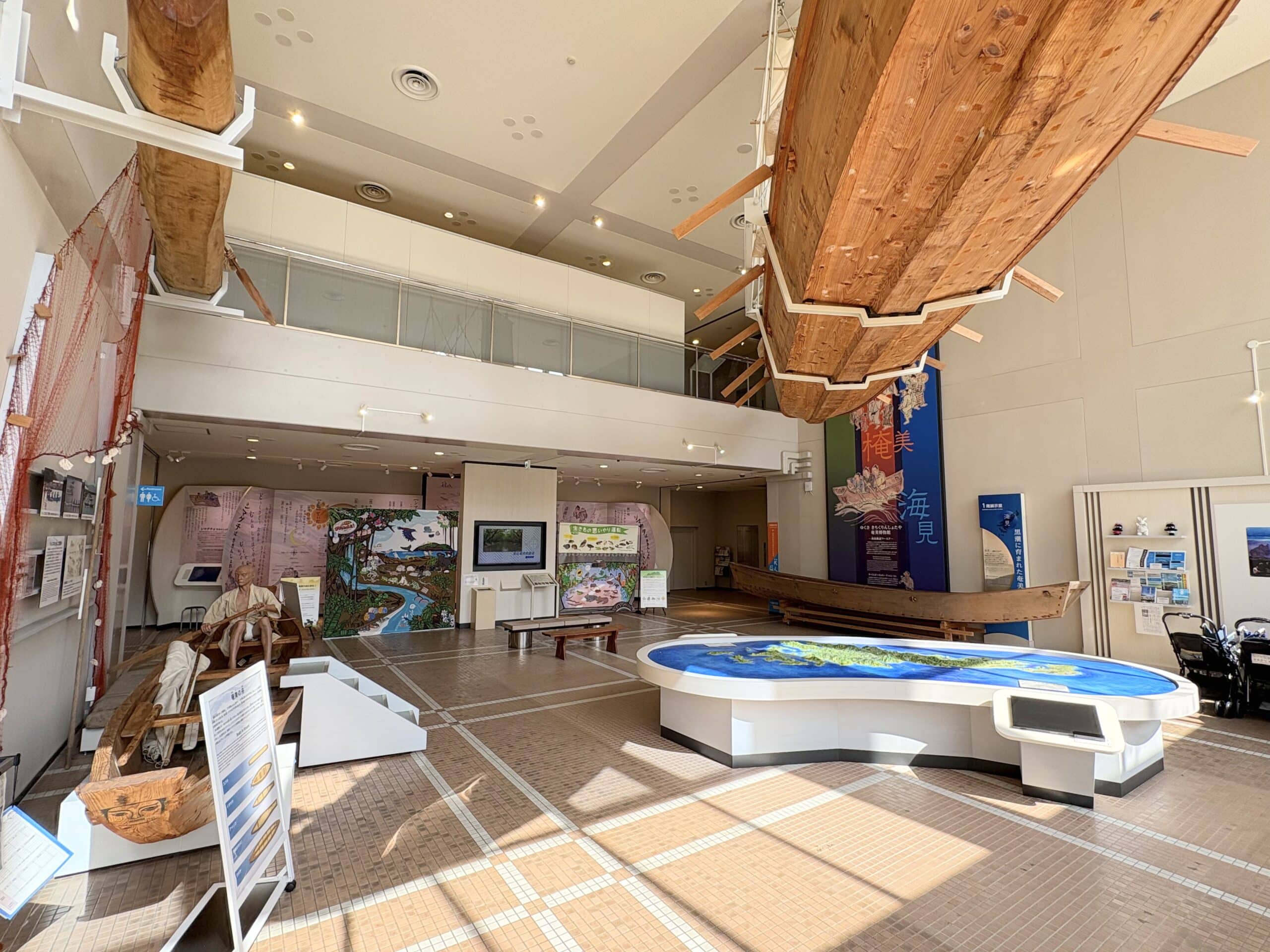
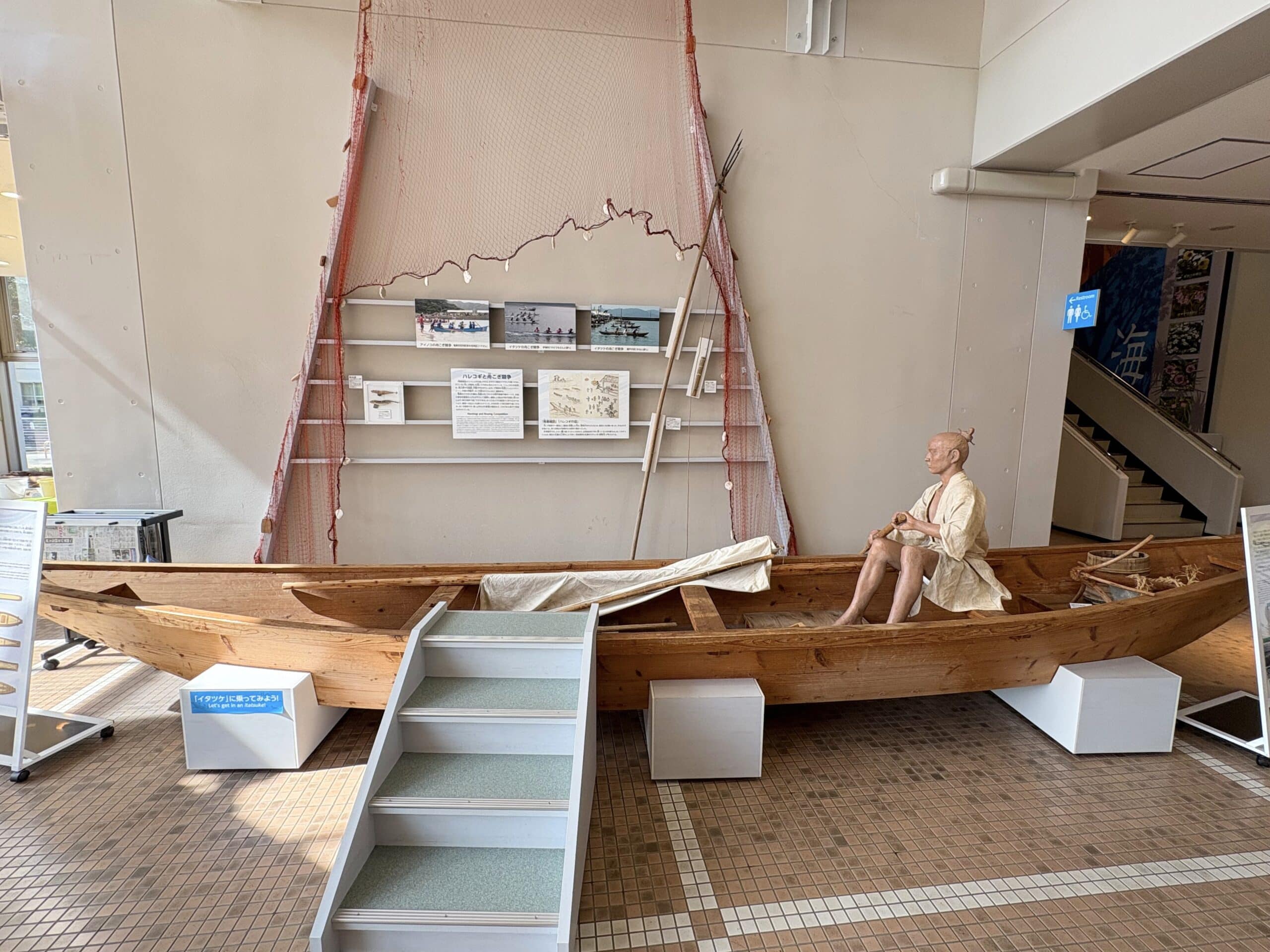
As you step into the first floor, your eyes are immediately drawn to a striking display of large wooden boats suspended from the ceiling. These vessels—crafted and used across different historical periods—illustrate how local boatmaking evolved in response to the sea conditions around Amami, shaped by the powerful Kuroshio Current.
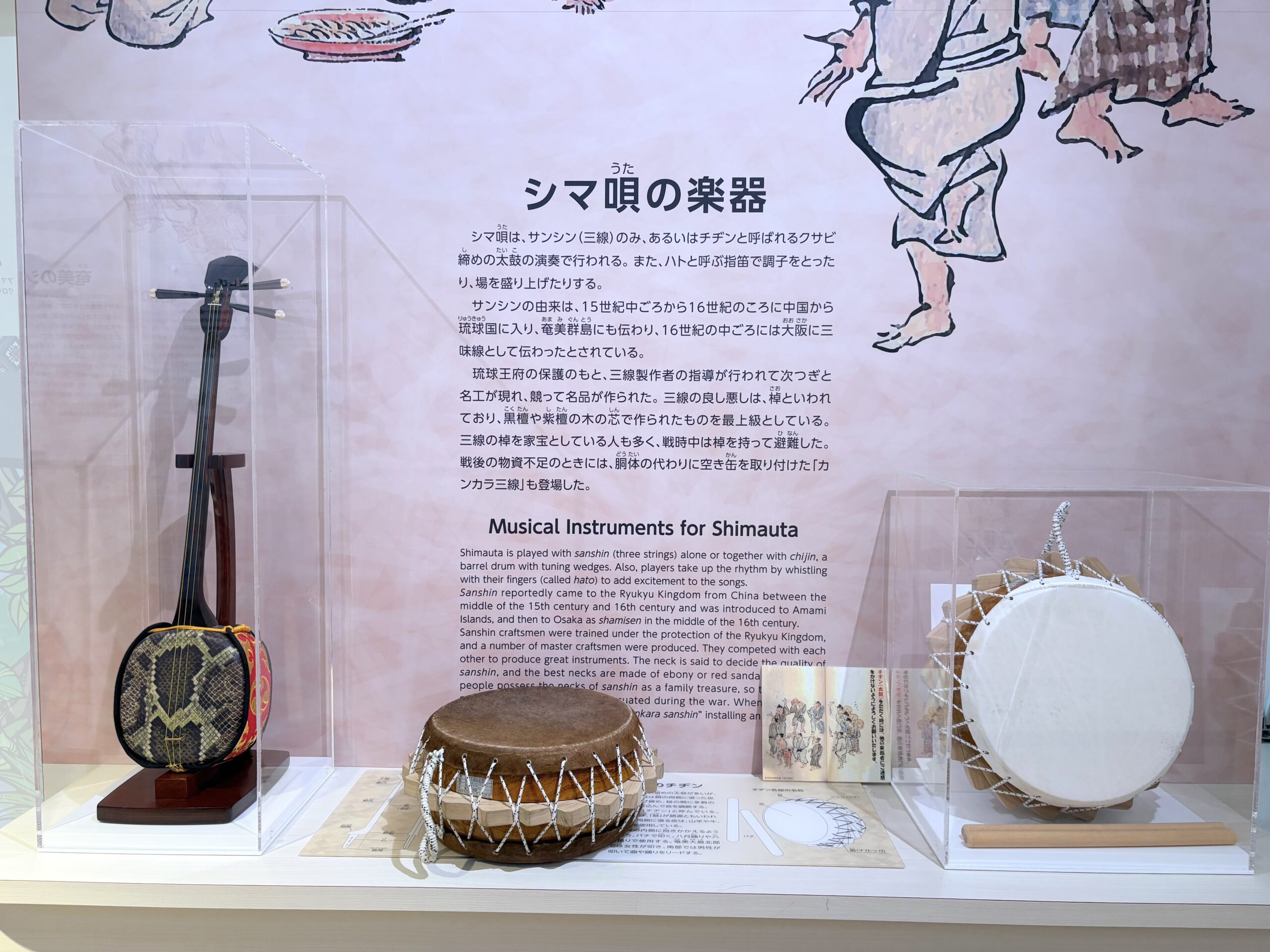
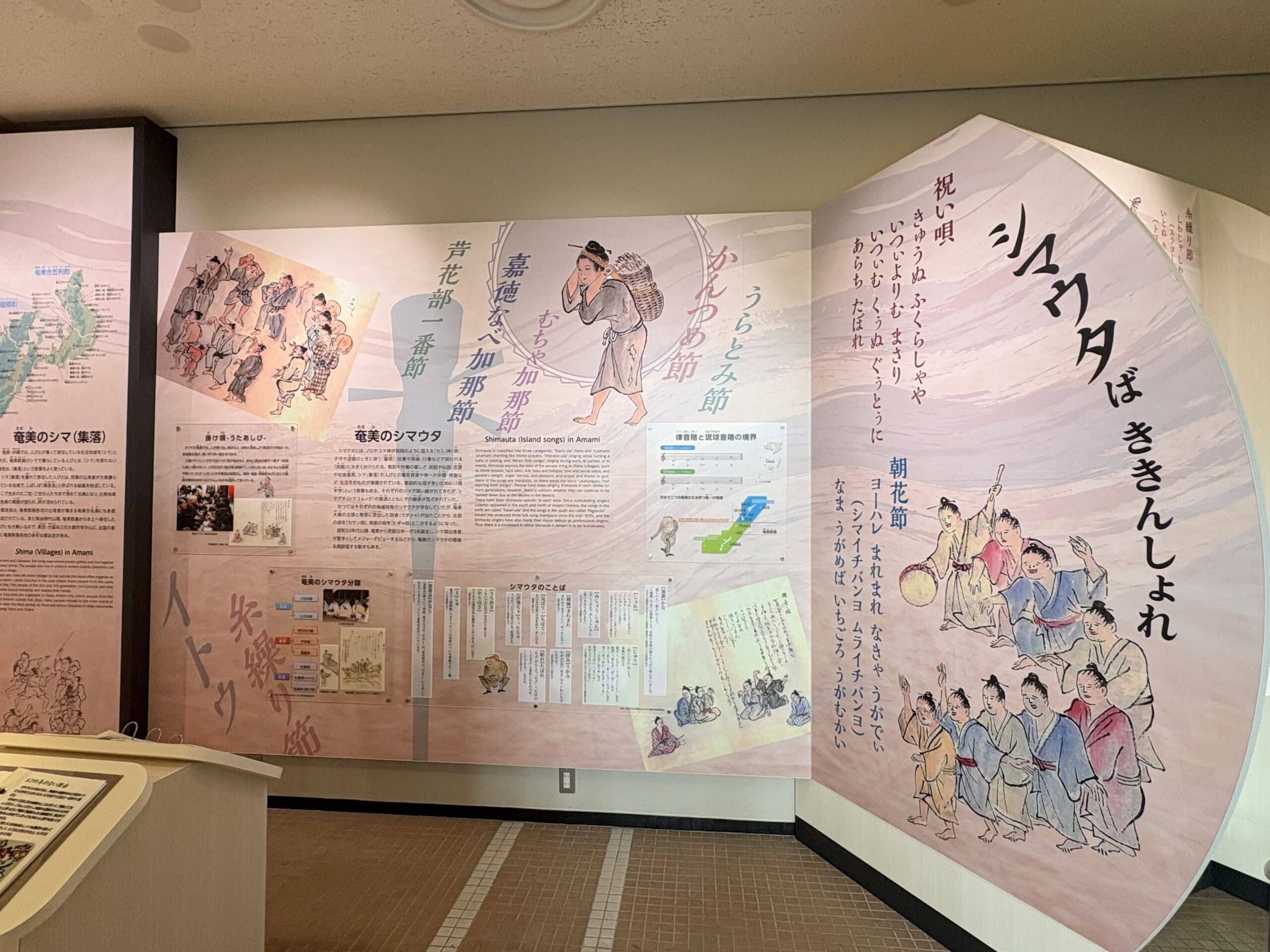
The exhibit also features an introduction to Shima-uta, the traditional folk songs of Amami, with explanations of their rhythms, meanings, and cultural significance. Visitors can even touch and try a Chijin drum, a hand-held instrument used to accompany these soulful island songs, making the experience both educational and interactive.
2nd Floor – Amami Nurtured by Boundary History
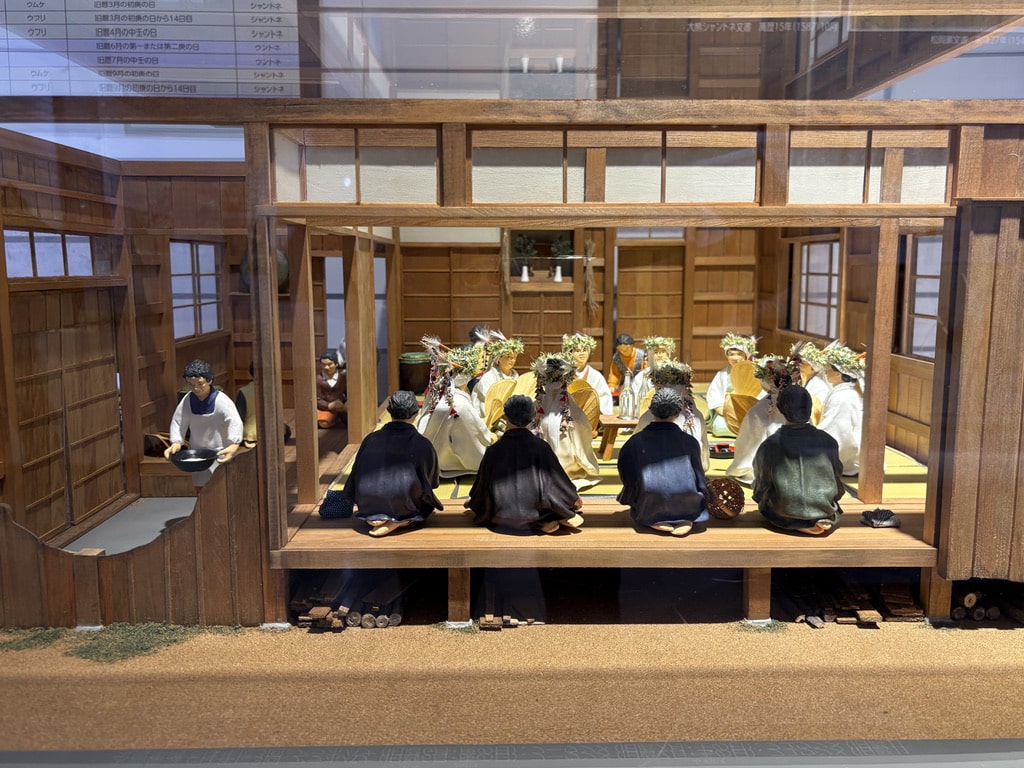
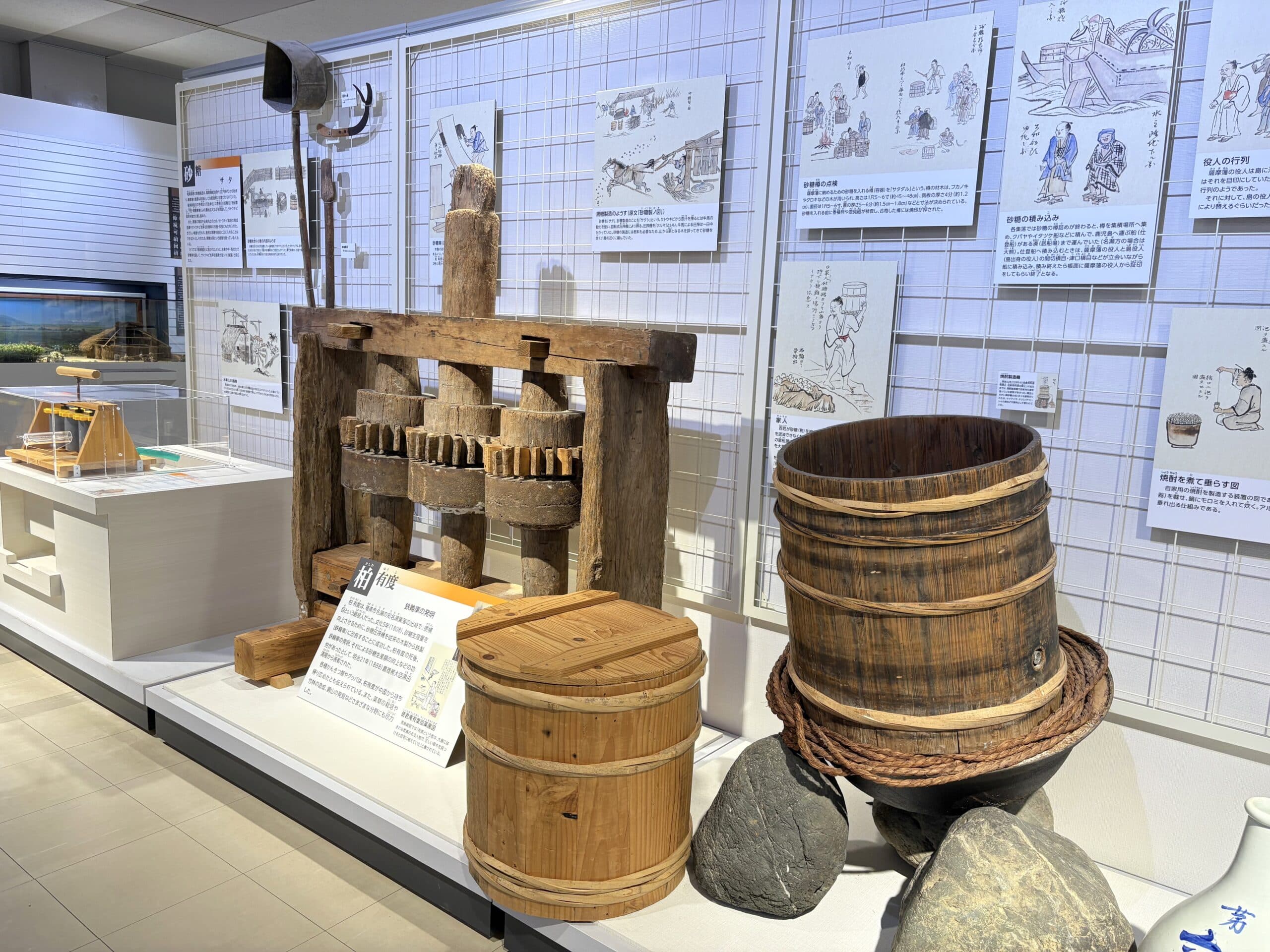
The second floor presents a chronological journey through the history of Amami Oshima, from ancient times to the present day. Artifacts excavated from archaeological sites are thoughtfully arranged to trace the island’s development across different eras.
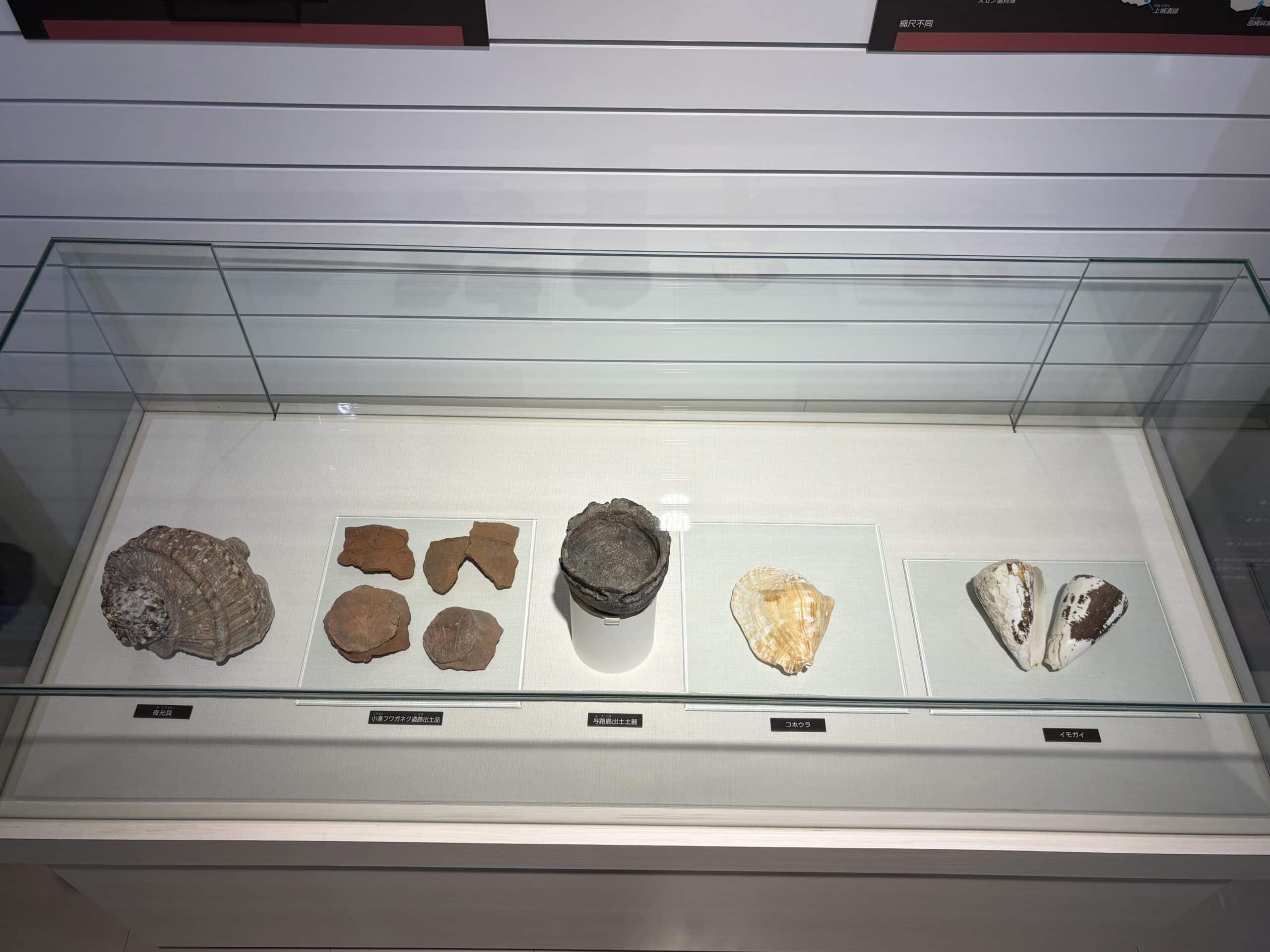
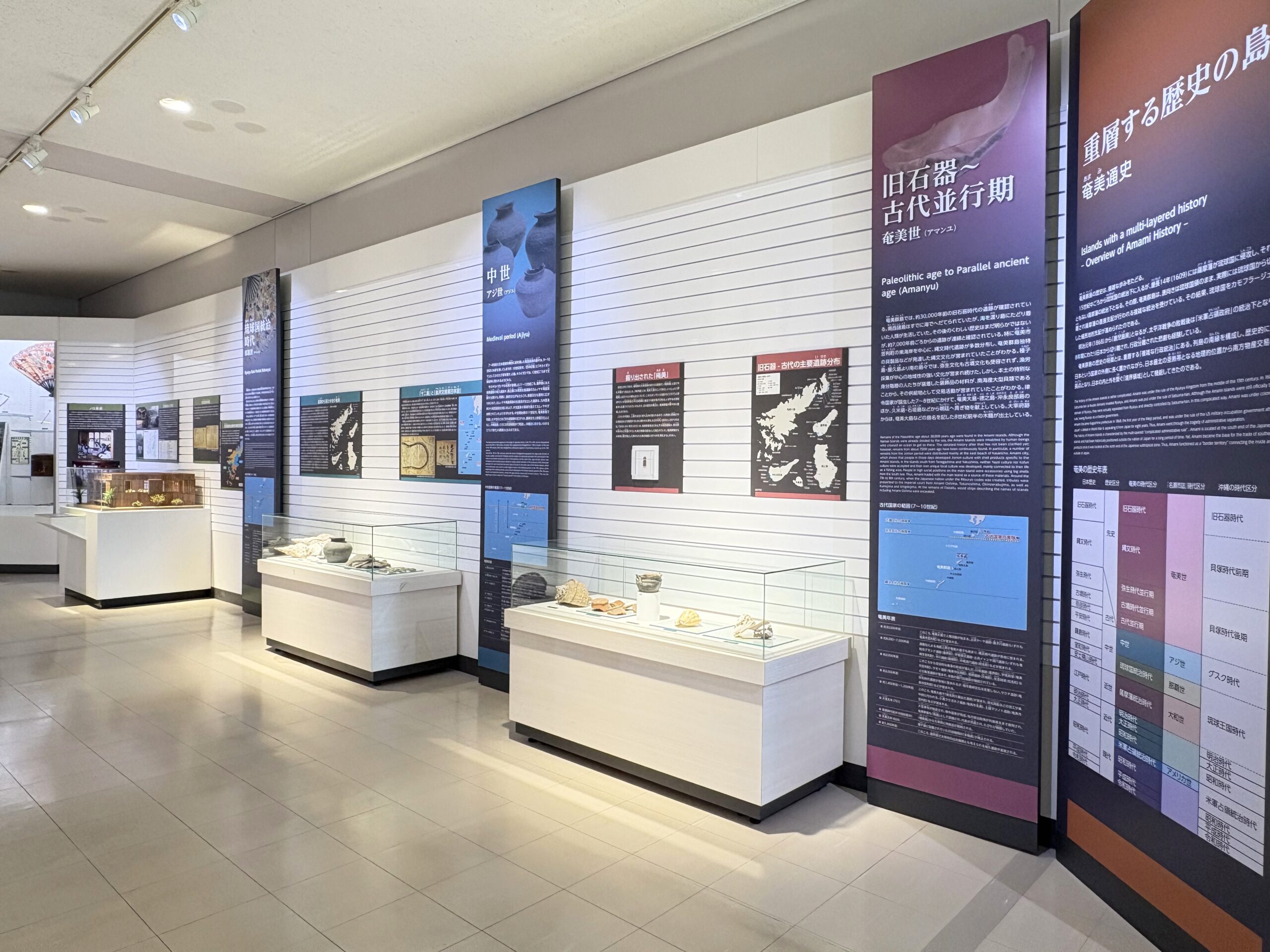
Visitors can discover tools and everyday items once used in rituals, farming, cooking, and traditional crafts. Detailed dioramas recreate scenes from the past, allowing you to imagine what life was like in Amami’s villages generations ago. The exhibition showcases how culture, trade, and governance evolved in this borderland region influenced by both mainland Japan and the Ryukyu Islands.
3rd Floor – Amami Nurtured by Subtropical Rainforest
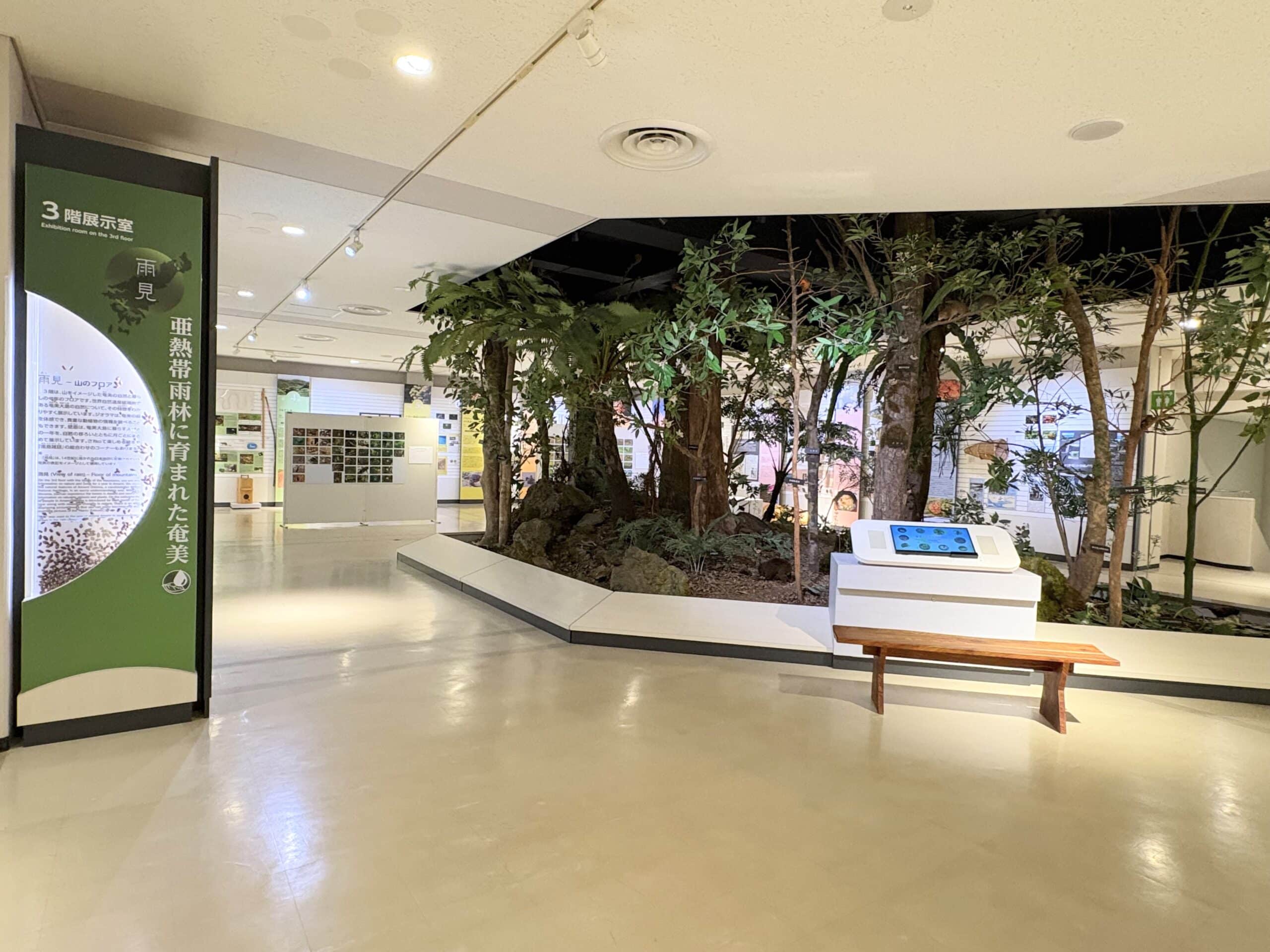
The third floor immerses visitors in the lush biodiversity of Amami’s forests, starting with a detailed diorama that recreates the island’s subtropical rainforest. Life-sized taxidermy of native animals bring the forest scene to life, offering a close-up look at the wildlife that calls Amami home.
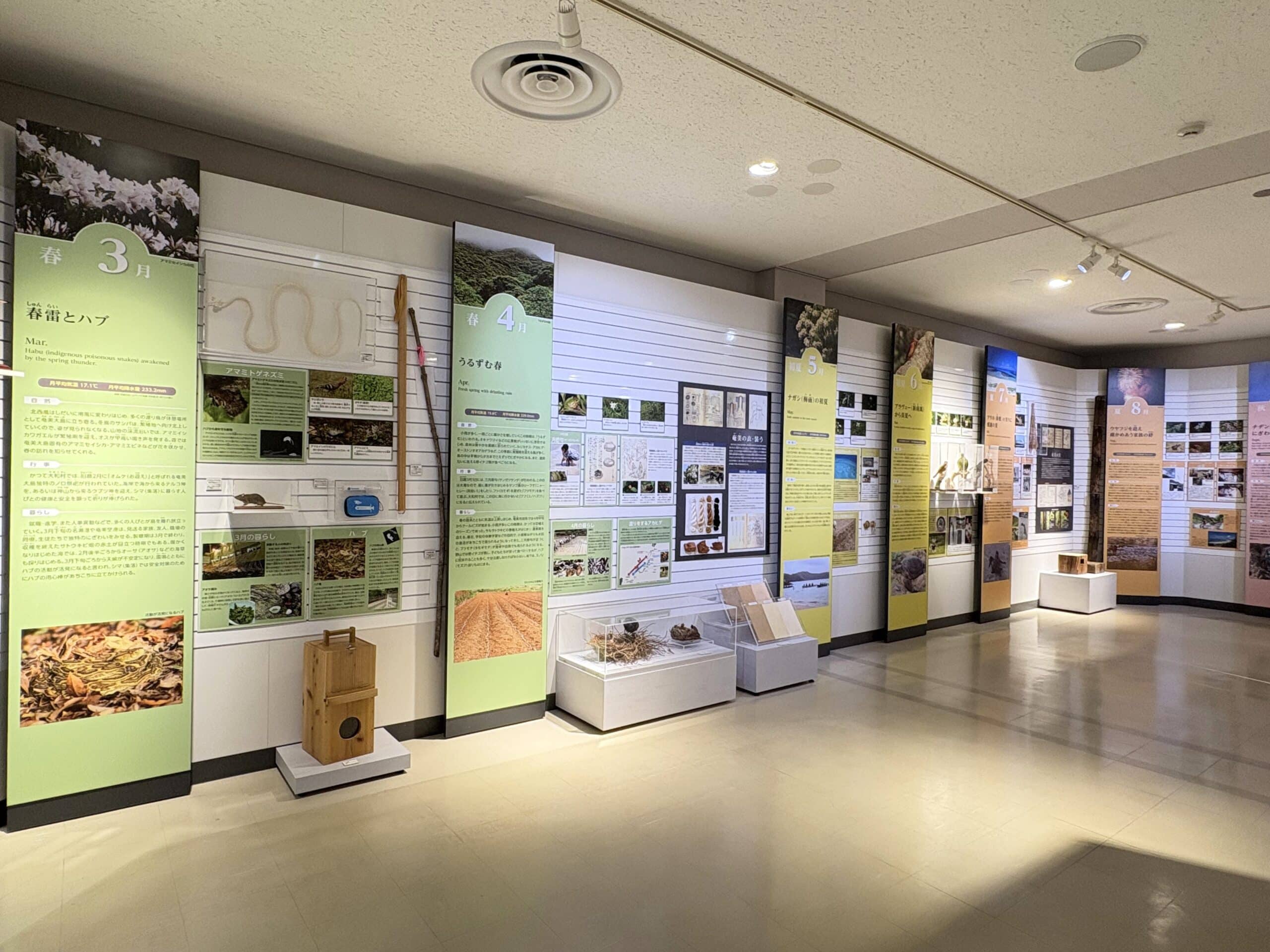
Exhibits also explain how the nature changes with the seasons, and why this ecosystem—recognized as part of a UNESCO World Natural Heritage Site—is considered so precious and unique. Through interactive displays and informative panels, visitors gain a deeper appreciation for the delicate balance between Amami’s natural beauty and the need to protect it for future generations.